Los Cristianos
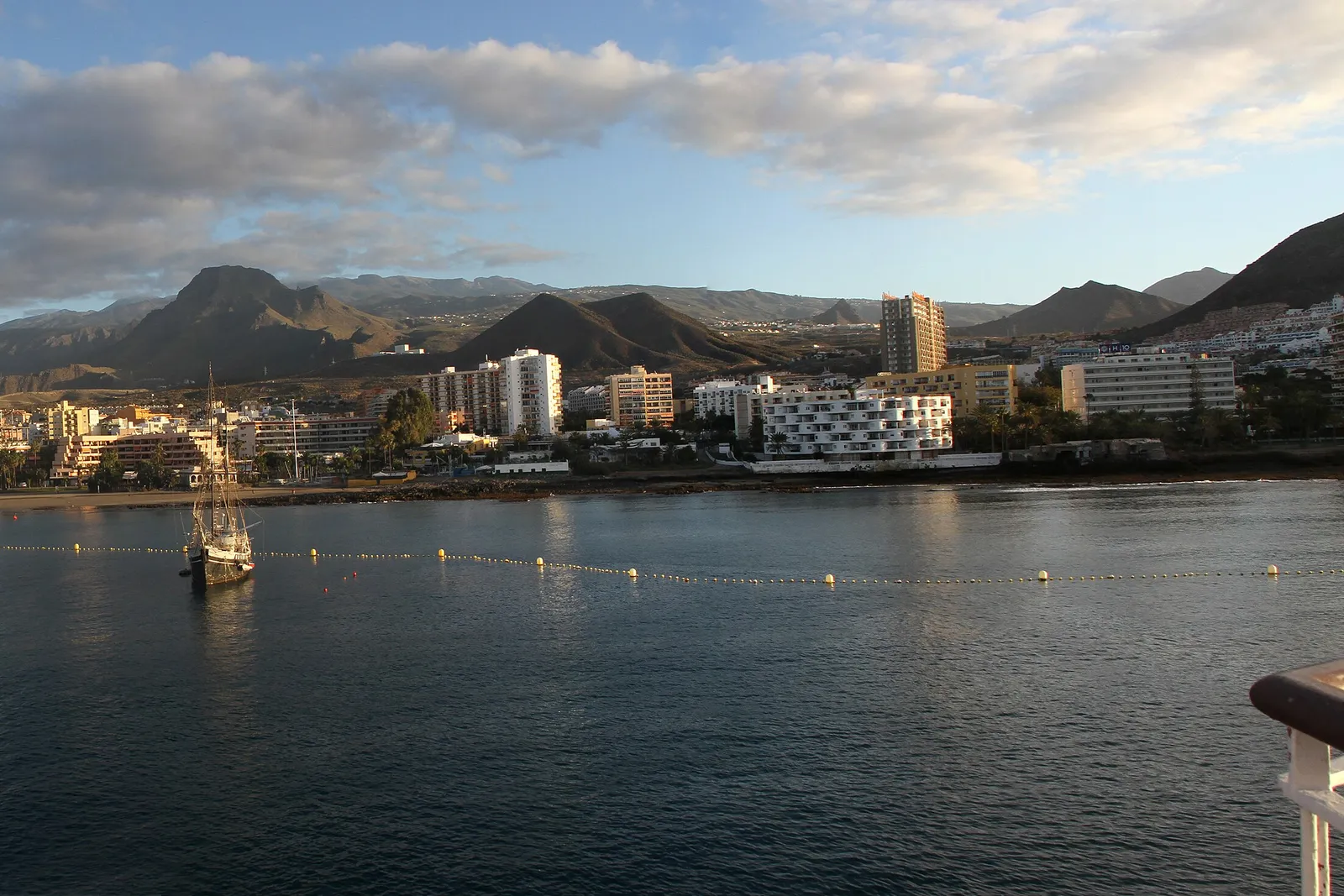
The old fishing village that became the south's first resort: a sheltered bay of golden sand, a busy ferry port and Montaña de Guaza standing over it all.
At a glance
- Where
- South coast, in the municipality of Arona
- Beaches
- Los Cristianos, Las Vistas, Los Tarajales and El Callao
- Ferry to La Gomera
- About 50 minutes
- From the south airport
- About 15 to 30 minutes by car
Los Cristianos is the seaside town of Arona, on the southern side of Tenerife. Arona council calls it the founding core and the commercial and cultural engine of the municipality; the old town centre, where the town hall still stands, is up in the hills. With 21,323 people at the end of 2017, it's the biggest place in Arona.
A group of conquistadors under Jorge Grimón landed here in 1496, but for centuries afterwards the coast was almost empty. In the 1860s Los Cristianos was described as a hamlet of just three single storey houses, one two storey house and a hut. Settled communities grew up later at Los Cristianos and Las Galletas, living from fishing, farming and loading boats, and by 1931 the bay was busy enough for 286 steamships and 80 sailing ships to call. A proper harbour opened in 1935.
Then came the visitors. Swedish visitor Bengt Rylander came in 1956 for the warm climate and spread the word back home, which is why the main street is Avenida de Suecia. From the 1960s the small fishing village grew into a resort, with early complexes such as Rosamar, La Estrella, Cristianmar and Moreque.
The beaches
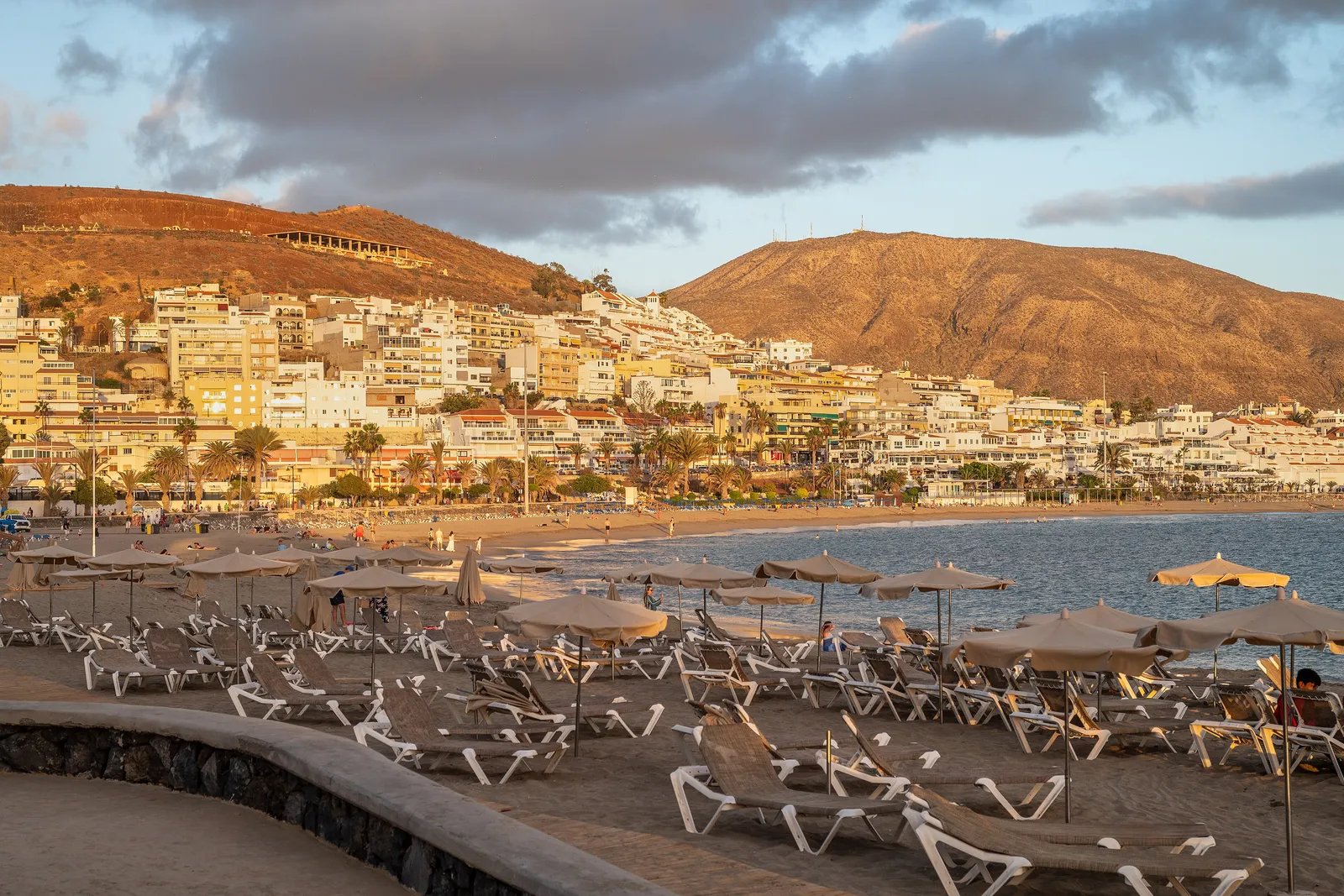
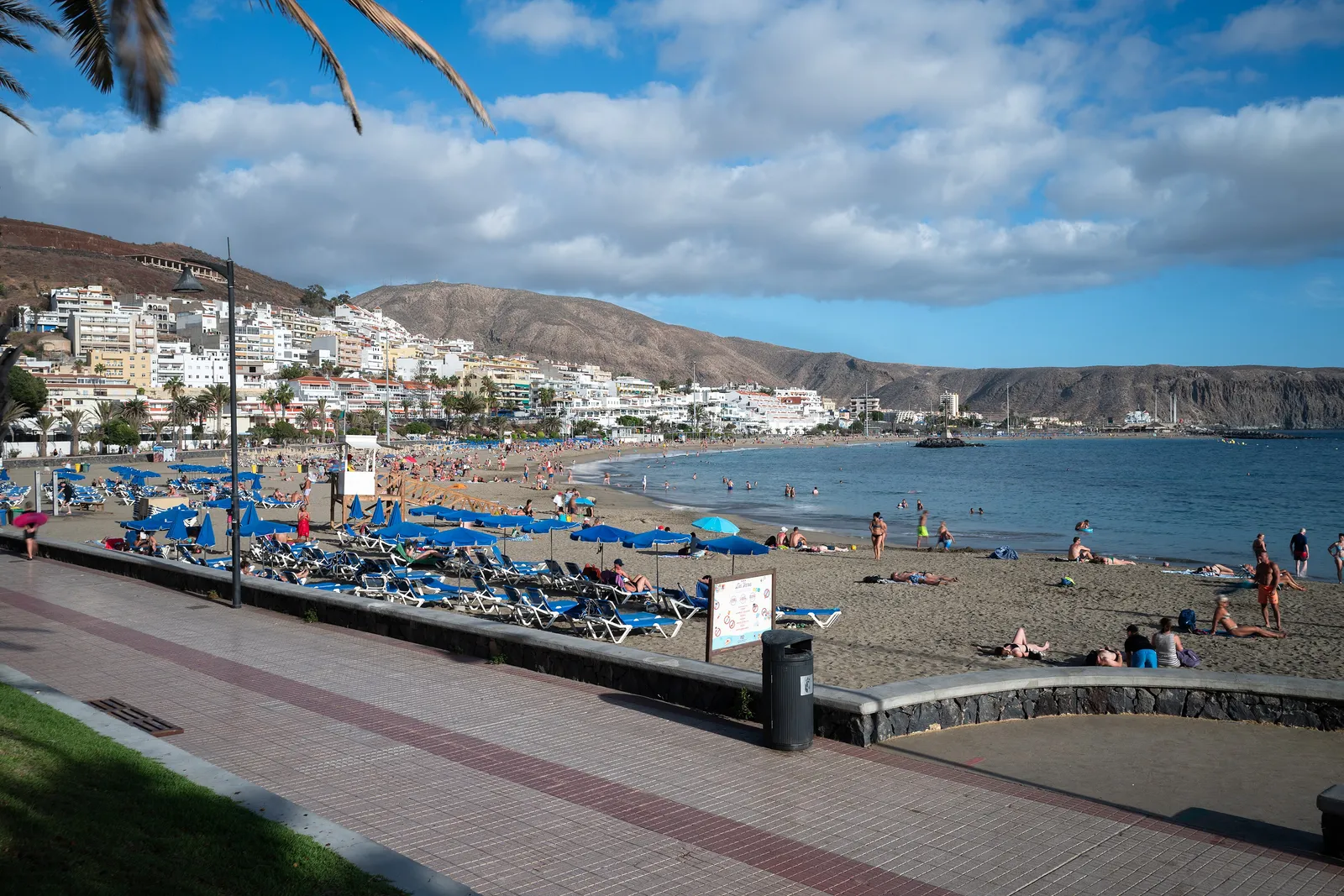
Los Cristianos sits on a sheltered bay, and its beaches run from soft golden sand by the harbour to volcanic pebbles under the mountain. According to the council, both Playa de Los Cristianos and Las Vistas hold the Blue Flag.
- Playa de Los Cristianos The town beach, with fine golden sand, which welcomed the south's first tourists in the 1960s. It has loungers and parasols for hire, showers, toilets, an accessible area and lifeguards from 10:00 to 18:00.
- Las Vistas A long, broad beach of fine light sand, about 80 metres wide, with calm water behind a row of breakwaters. It's man-made, and in the middle stands an artificial island that works as a fountain. It also holds the AENOR Universal Accessibility flag.
- Playa del Callao About 420 metres of volcanic grit and pebbles with calm water, between Los Cristianos and Costa del Silencio, below Montaña de Guaza. Nudism is practised on some stretches.
- Playa Honda The council has opened the waves here, known as Fitenia and the Olas Derecha and Izquierda, to surfers.
Assisted bathing
Las Vistas offers assisted bathing all year, with 2 amphibious chairs, amphibious crutches and a hoist. Playa de Los Cristianos offers it every day from 15 June to 15 September and at Easter, with 1 chair. You don't need to book if you're on your own, but groups do.
The port and the other islands
Los Cristianos port is one of the busiest in Spain for passengers, and it's the gateway to the western islands: La Gomera, La Palma and El Hierro all have ferries from here.
- La Gomera San Sebastián de La Gomera is about 50 minutes away. Fred. Olsen Express runs up to 5 sailings a day, and Baleària sails the route too.
- La Palma Santa Cruz de La Palma takes about 2 and a half hours.
- El Hierro Valverde takes about 2 hours 20 minutes with Fred. Olsen Express.
Timetables change through the year, so check with the ferry company before you travel.
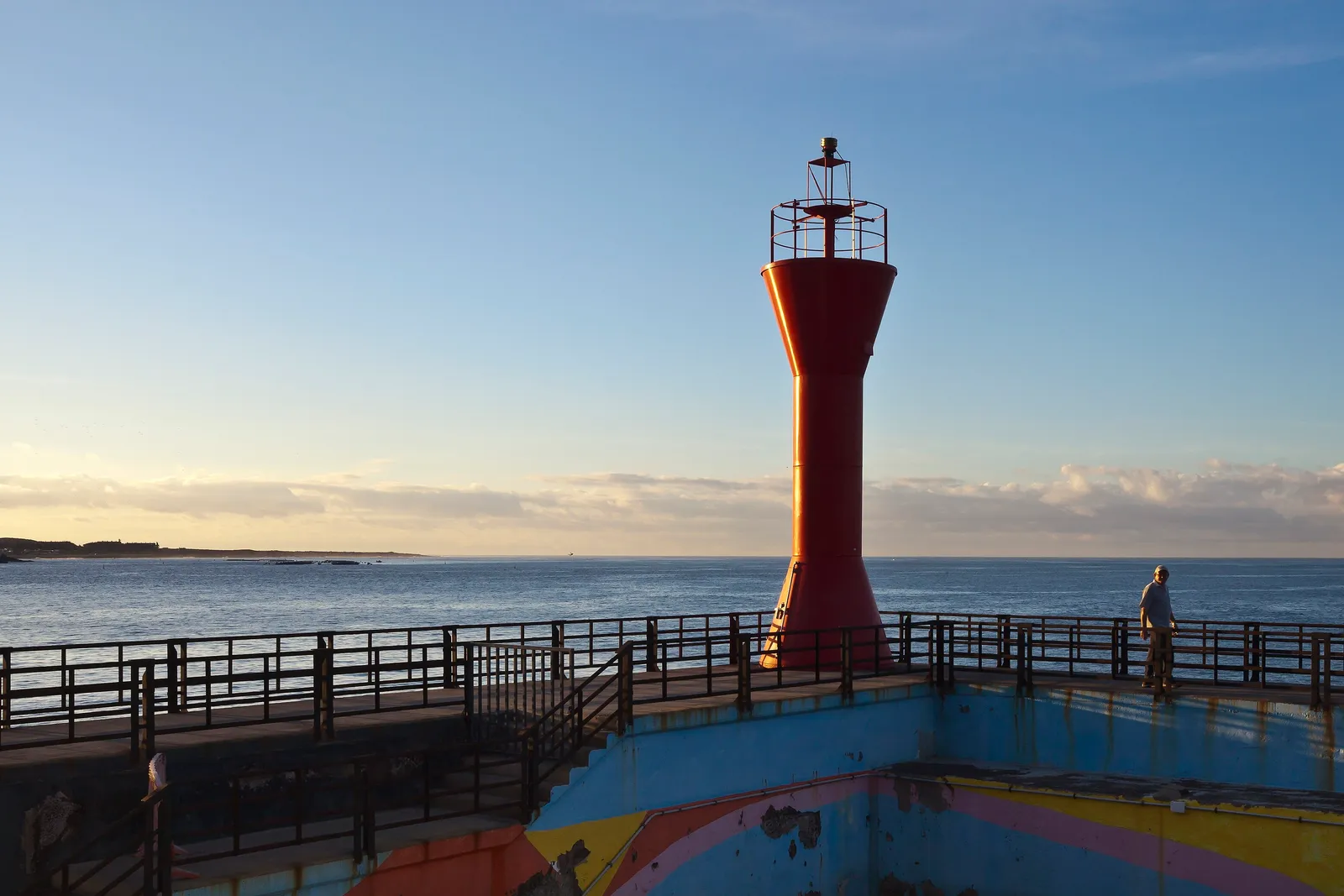
Whale and dolphin trips
Boats leave from Los Cristianos, as well as from Puerto Colón and Los Gigantes, and up to 21 species of whales and dolphins live in these waters. Look for a boat flying the Blue Boat flag, which shows it's authorised for whale watching.
The rules are strict. Boats must keep at least 60 metres away, stay with the animals for no more than 30 minutes, go slowly and avoid crowding them. Never swim with, feed or touch them, and if you see one injured or stranded, call 112.
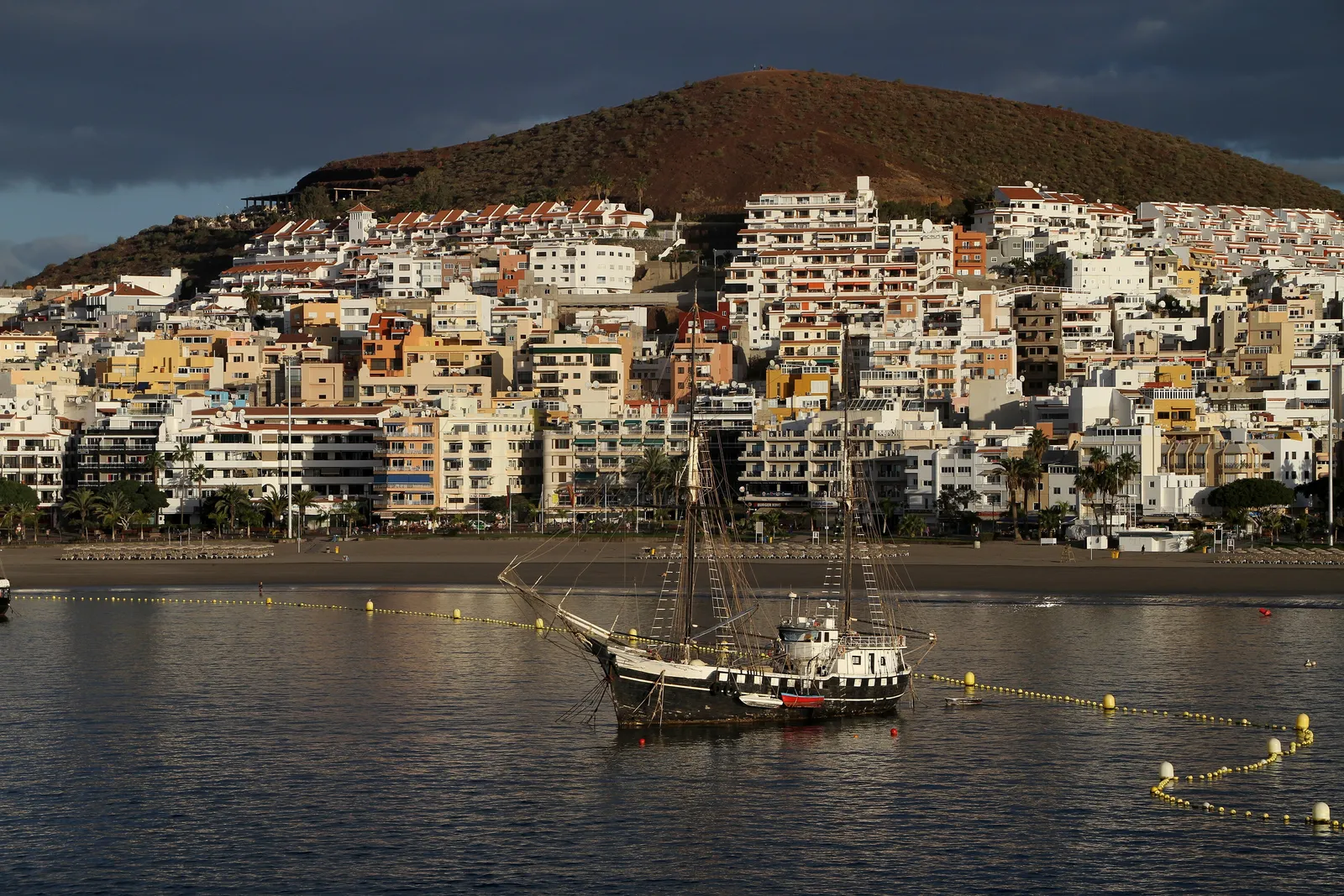
Montaña de Guaza
The flat-topped mountain behind the town is Montaña de Guaza, a natural monument covering 725.7 hectares and rising to 430 metres. Scopoli's shearwaters nest on it, and it has pre-Hispanic caves and Guanche burial sites.
Arona council's walking route starts on the north side, off the TF-6223, and climbs to the summit before dropping down the south side to Playa del Callao, reaching Los Cristianos after 6.5 km. Take water and sun protection.
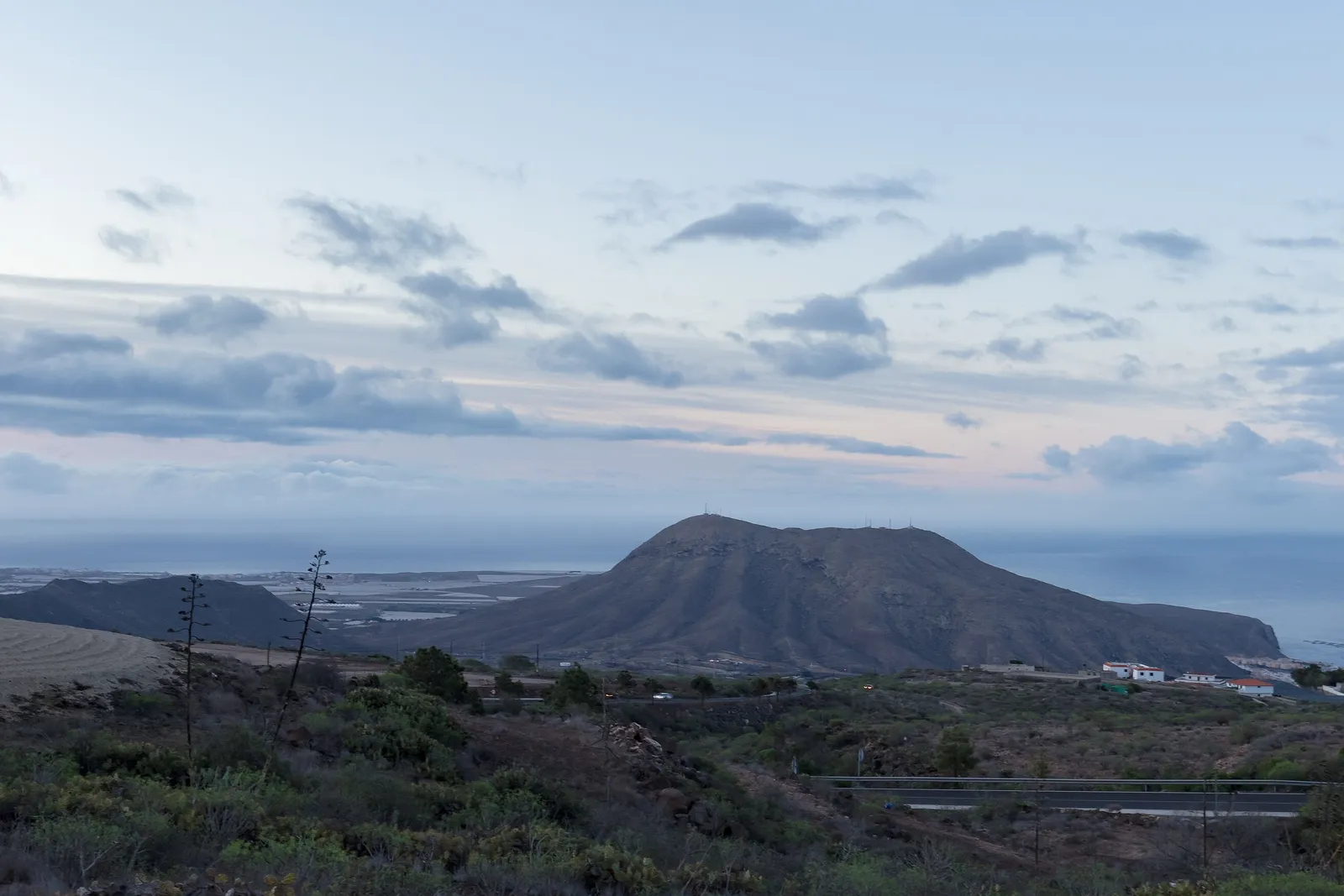
The promenade
The seafront promenade, named after Francisco Andrade Fumero, runs from Los Cristianos round to Playa de las Américas and on along the Costa Adeje coast. Arona council describes it as the largest barrier-free pedestrian zone in Europe, so it's an easy walk or roll from one end to the other.
Markets and music
Arona's tourism brochure lists the Mercadillo de Los Cristianos on Avenida Juan Carlos I on Tuesdays and Sundays. From October to March, the Canarias Folk Fest fills the Plaza de la Pescadera with crafts, local food and folk music. Days and times can change, so check locally before you go.
Getting there and around
Tenerife South airport is about 15 to 30 minutes away by car, depending on traffic. TITSA's line 40 runs every day between Costa Adeje bus station, Los Cristianos and the south airport, and takes about 40 minutes. At night, line 711 links Santa Cruz with the south airport, Los Cristianos and Costa Adeje.
Dates for the diary
- CarnivalThe Los Cristianos International Carnival, ending with the big Coso parade and the Burial of the Sardine. In 2026 it ran from 5 to 16 March.
- Late August or early SeptemberThe Virgen del Carmen fiestas, with the Romería Barquera along the bay and a procession along the promenade to the old quay. The dates change each year: in 2026 the Romería Barquera was on Sunday 30 August.
- October to MarchThe Canarias Folk Fest in the Plaza de la Pescadera.
Dates, times and prices can change, so check with the town hall or the operator before you set off.
Facts from Arona council, Turismo de Tenerife, Fred. Olsen Express, Baleària, TITSA and Canary Islands Government pages, checked in November 2026, and the Deckchair FM Tenerife factbook.
Deckchair FM plays from Tenerife all day, every day.
Easy listening around the clock, with the island's weather and a bit of Tenerife life from our presenters.