Puerto de la Cruz
The island's first holiday resort, on the green north coast: an old fishing town with black sand beaches, seawater pools and a long British history.
At a glance
- Where
- North coast, below the Orotava Valley
- Size
- Under 9 sq km
- Beaches
- Black volcanic sand
- Average temperature
- About 22°C over the year
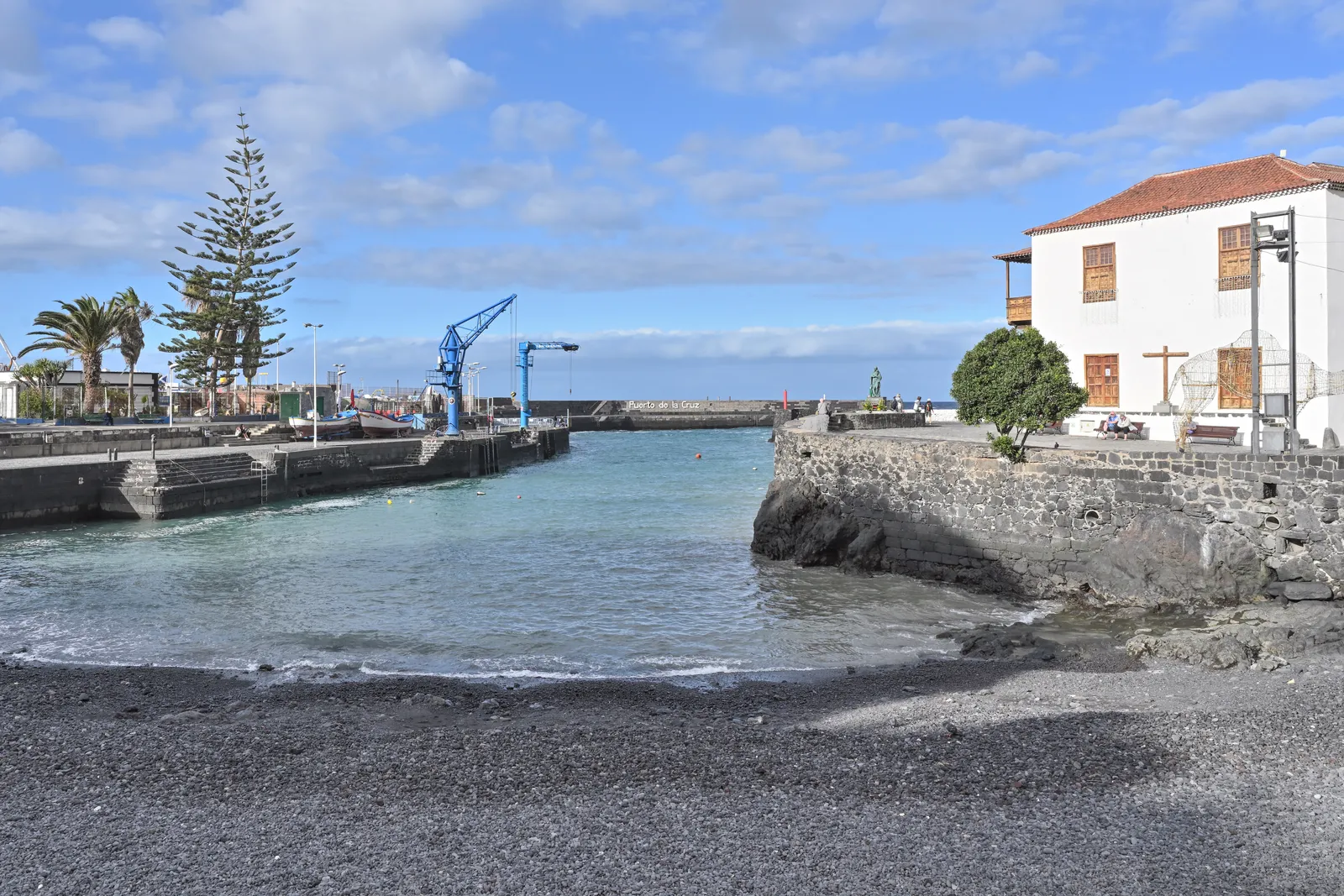
Puerto de la Cruz started life as a fishing village, and already had port traffic by 1502. It was the port of La Orotava, the town up the valley, until it became a town of its own in 1808, and it took its name, Port of the Cross, after settlers planted a cross on the new quay.
It covers less than 9 square kilometres, making it the smallest municipality on Tenerife and the most densely populated. The town centre sits just 9 metres above the sea, and the average temperature over the year is about 22 degrees, with warm winters and dry summers.
Puerto and the Orotava Valley were the first holiday resorts in the Canary Islands, first drawing wealthy Europeans who came for the mild climate and their health. In 1886 around 300 tourists came; by 1895 it was nearly 2,900 a year, and about 2,000 of them were British.
Lago Martiánez
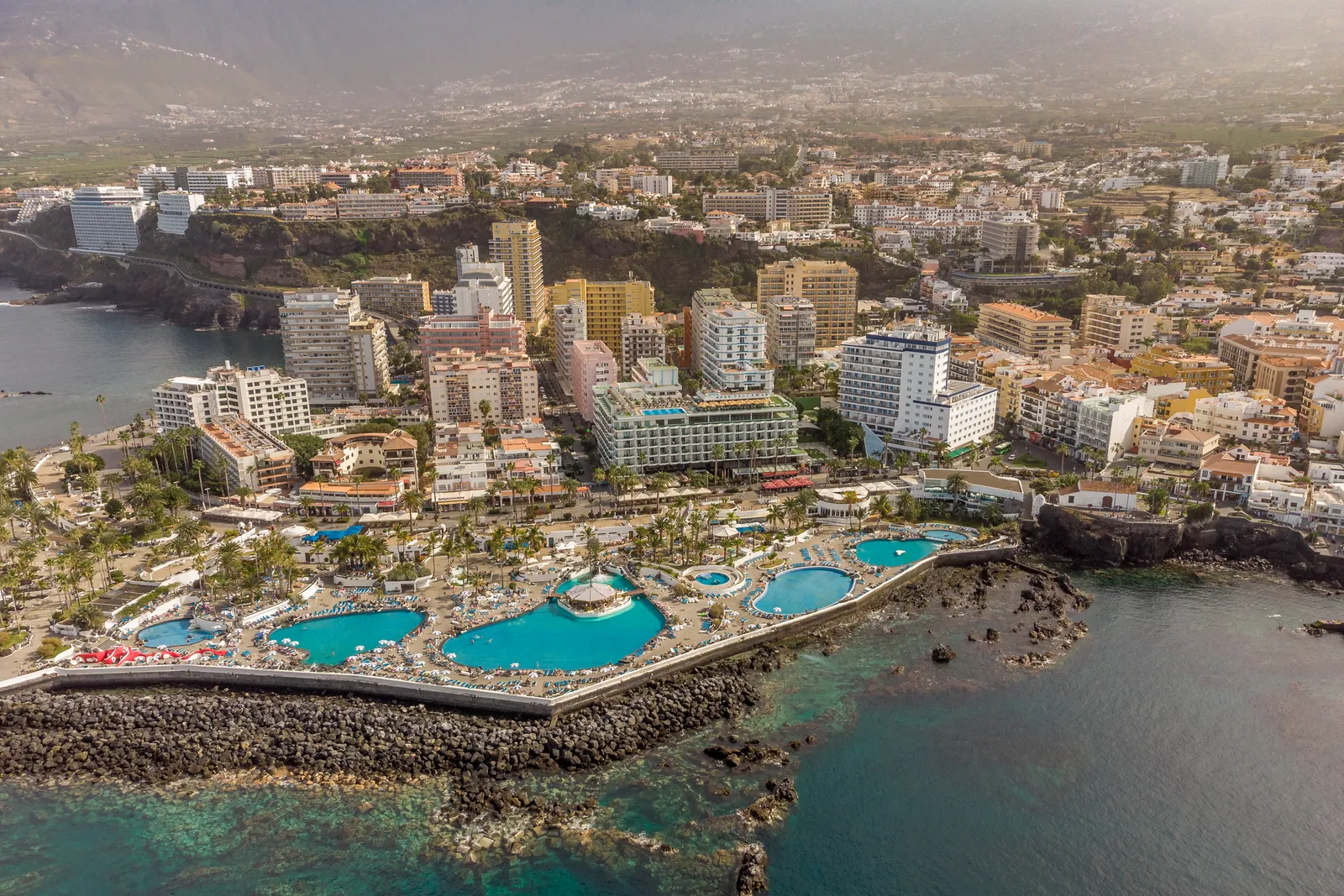
Lago Martiánez is a complex of seawater pools and an artificial lake designed by the Lanzarote artist César Manrique. It opened in stages from 1971, and the lake opened on 30 April 1977. The lake and its islands cover 33,000 square metres, all of it won from the sea.
It was built over the rock pools of the Llanos de Martiánez, where the town's first tourists went bathing around 1900. Look out for Manrique's own sculptures: a mobile called Los Alisios, after the trade winds, and La Jibia, the squid, by the children's pool.
Playa Jardín
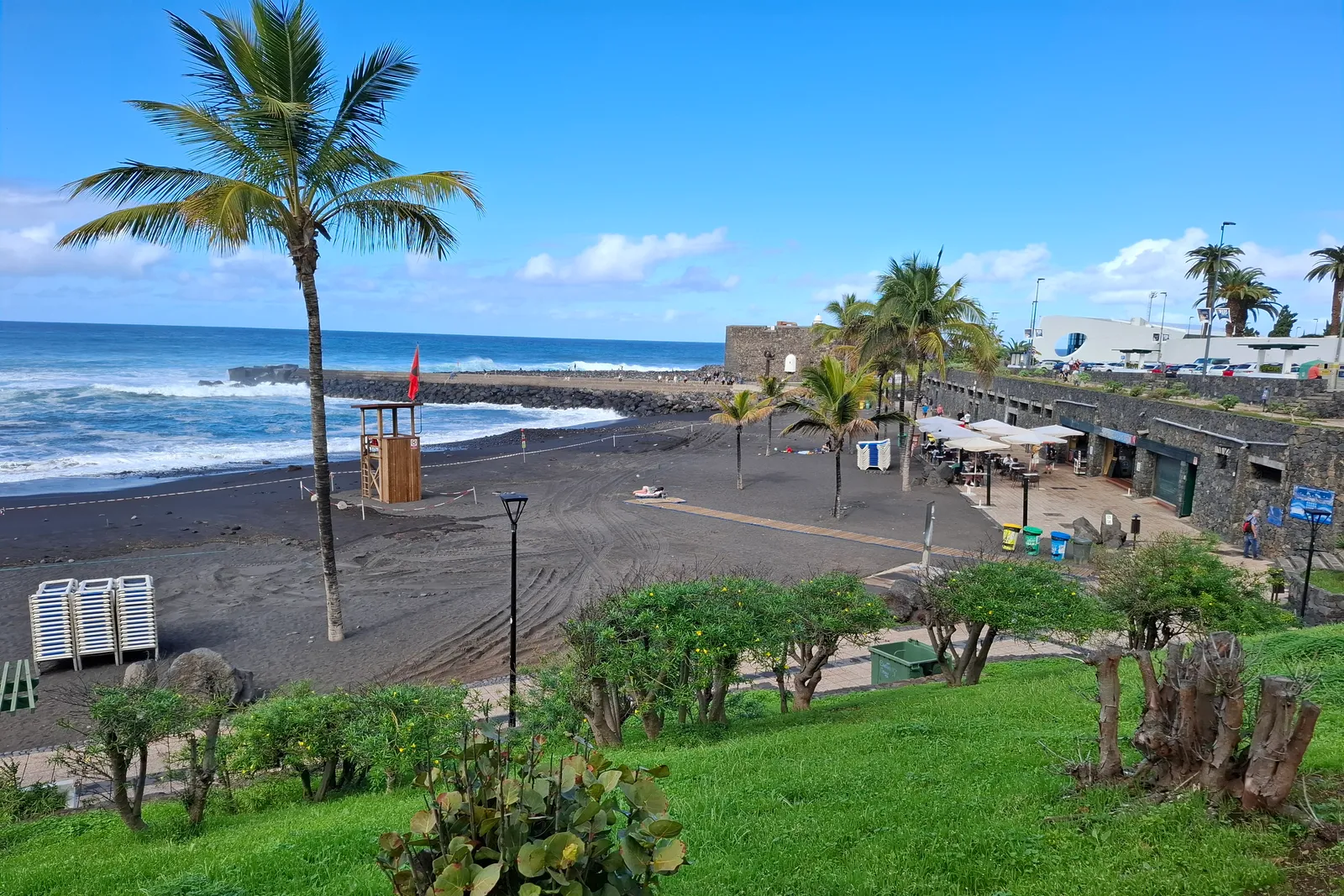
Playa Jardín, the garden beach, is black volcanic sand with gardens and promenades designed by César Manrique. It's really 3 beaches, Charcón, Castillo and Punta Brava, and locals split Punta Brava into 3 more: Playa Chica, Julián and Grande.
Beside it stands the Castillo de San Felipe, built between 1599 and 1604 to guard the port. The five-sided castle was once ringed by a moat with a drawbridge and could house about 35 soldiers. Today it hosts concerts and art exhibitions.
The old town and the harbour
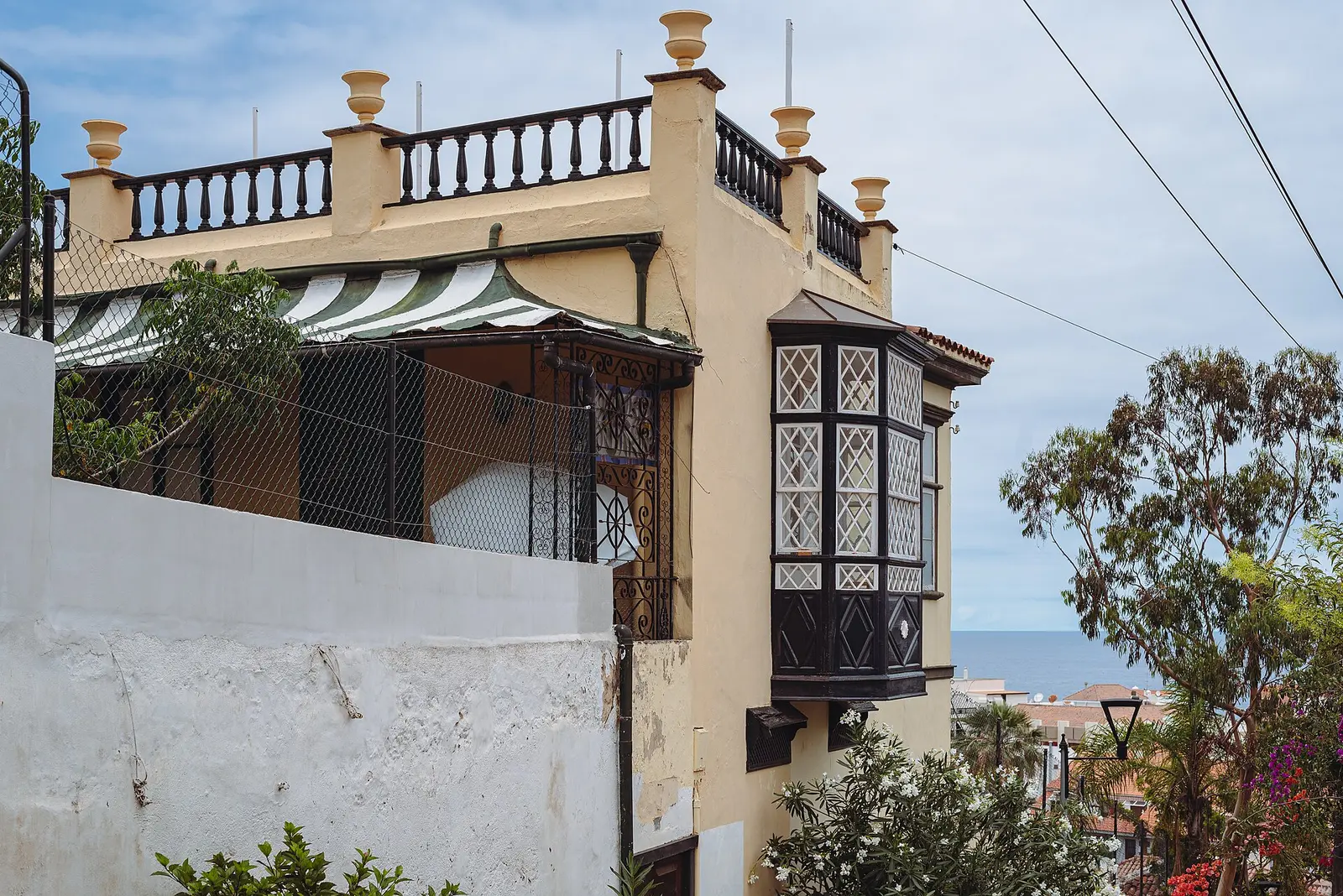
The heart of the town is the Plaza del Charco, best known for its fountain basin planted with a ñamera, a big-leaved taro plant. The old centre has been a protected historic site since 2006.
Along the seafront, the Paseo de San Telmo passes the little whitewashed chapel of San Telmo, built in 1870, beside the remains of an old gun battery and a small vaulted powder store above a sea cave.
The main church, Nuestra Señora de la Peña de Francia, was first built in 1697 and has carved Mudéjar style wooden ceilings over its 3 naves. The old Customs House dates from 1620 and holds a museum of 20th century Canarian art upstairs, and the Archaeological Museum, founded in 1953 in the old fishing quarter of La Ranilla, is known for its Guanche pottery.
The botanical garden
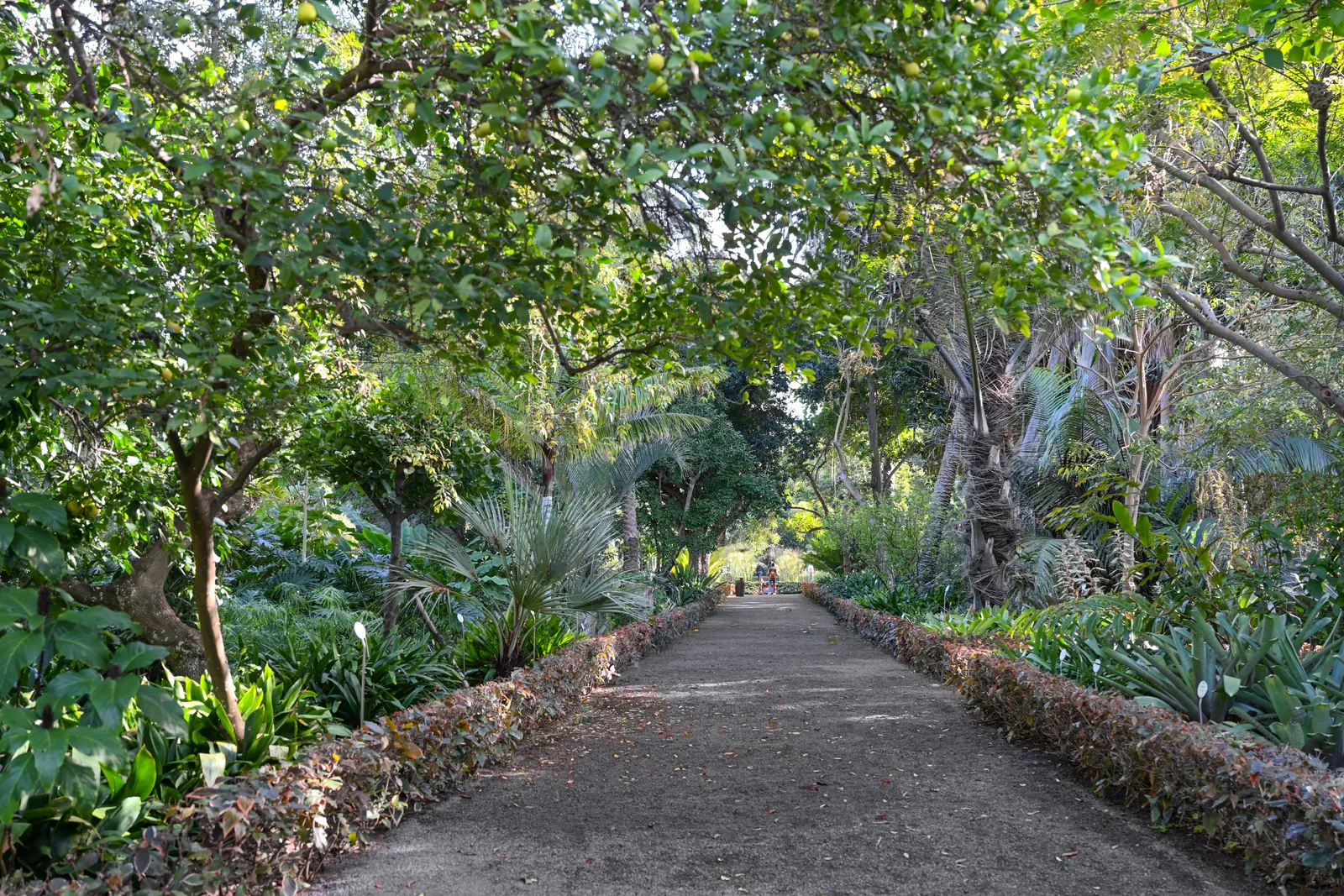
The botanical garden was founded by royal order of King Carlos III in 1788 and is the second-oldest botanical garden in Spain. It covers about 20,000 square metres, laid out in geometric beds. Its official name is still the Jardín de Aclimatación de La Orotava, because the port belonged to La Orotava when it was founded.
The idea was to get plants from Spain's American colonies used to a new climate before they went on to the royal gardens in Madrid and Aranjuez. It never really worked, because inland Spain's climate is so different from Tenerife's, but the garden stayed.
Close by, the Sitio Litre garden takes its name from Archibald Little, who bought the estate in 1774. It has a large orchid collection and the biggest and oldest dragon tree in town, and guests at its 18th century house included Agatha Christie, the botanical painter Marianne North and the explorer Richard Francis Burton.
Loro Parque
Loro Parque, the parrot park, opened on 17 December 1972 with 150 parrots on about 13,000 square metres, and from the start offered what was the first parrot show in Europe. It now holds what is described as the largest parrot collection in the world, and its Planet Penguin enclosure opened in 1999.
The opening sequence of the 2005 film The Hitchhiker's Guide to the Galaxy was filmed there, and Michael Jackson visited during his stay in the town in 1993.
The British in Puerto
The Gran Hotel Taoro opened on 22 December 1890, described as the first grand hotel in Tenerife and in Spain. Its company built the first tennis court and the first golf course in the Canary Islands to keep its Victorian winter guests busy. After years as a casino and then standing almost empty, it reopened as a hotel on 20 October 2025.
All Saints' Church, built in 1890 and 1891 with money from British residents and visitors, was the first Anglican church built in the Canary Islands, and the town has the oldest Anglican cemetery in the islands.
Agatha Christie spent a couple of weeks here in February 1927, and on their 1963 Tenerife holiday George Harrison and Ringo Starr drove around Puerto and the Orotava Valley in a red Austin Healey Sprite.
Dates for the diary
- CarnivalThe Mascarita Ponte Tacón, a race through the streets in heels at least 10 centimetres high, and the Burial of the Sardine, when a giant papier mâché sardine is paraded to the waterfront, set alight and followed by fireworks.
- Holy WeekA festival of early and Baroque music, held every year since 2002.
- 3 MayA local holiday for the Holy Cross, which also marks the founding of the town.
- 23 JuneThe Night of San Juan: bonfires on the beach, and the old public fountains decorated with fruit, flowers and palm leaves.
- 24 JuneIn the morning, goats are taken for a bath in the sea at the fishing harbour, the baño de las cabras.
- 16 JulyThe Virgen del Carmen is taken out to sea by the fishermen, with sardines fried by the harbour the night before. People try to cross a greased pole above the harbour, the cucaña, and so much water gets thrown about that it's known as the Fiesta del Agua.
- 29 NovemberSan Andrés eve: children run through the streets dragging strings of old pots and cans, and people eat salted fish with mojo, gofio and roasted chestnuts.
Dates, times and prices can change, so check with the town hall or the operator before you set off.
Facts from the Deckchair FM Tenerife factbook, checked against published sources in November 2026.
Deckchair FM plays from Tenerife all day, every day.
Easy listening around the clock, with the island's weather and a bit of Tenerife life from our presenters.