Los Gigantes
A small resort beneath sheer cliffs on the west coast, with whales and dolphins offshore and the old Teno mountains behind.
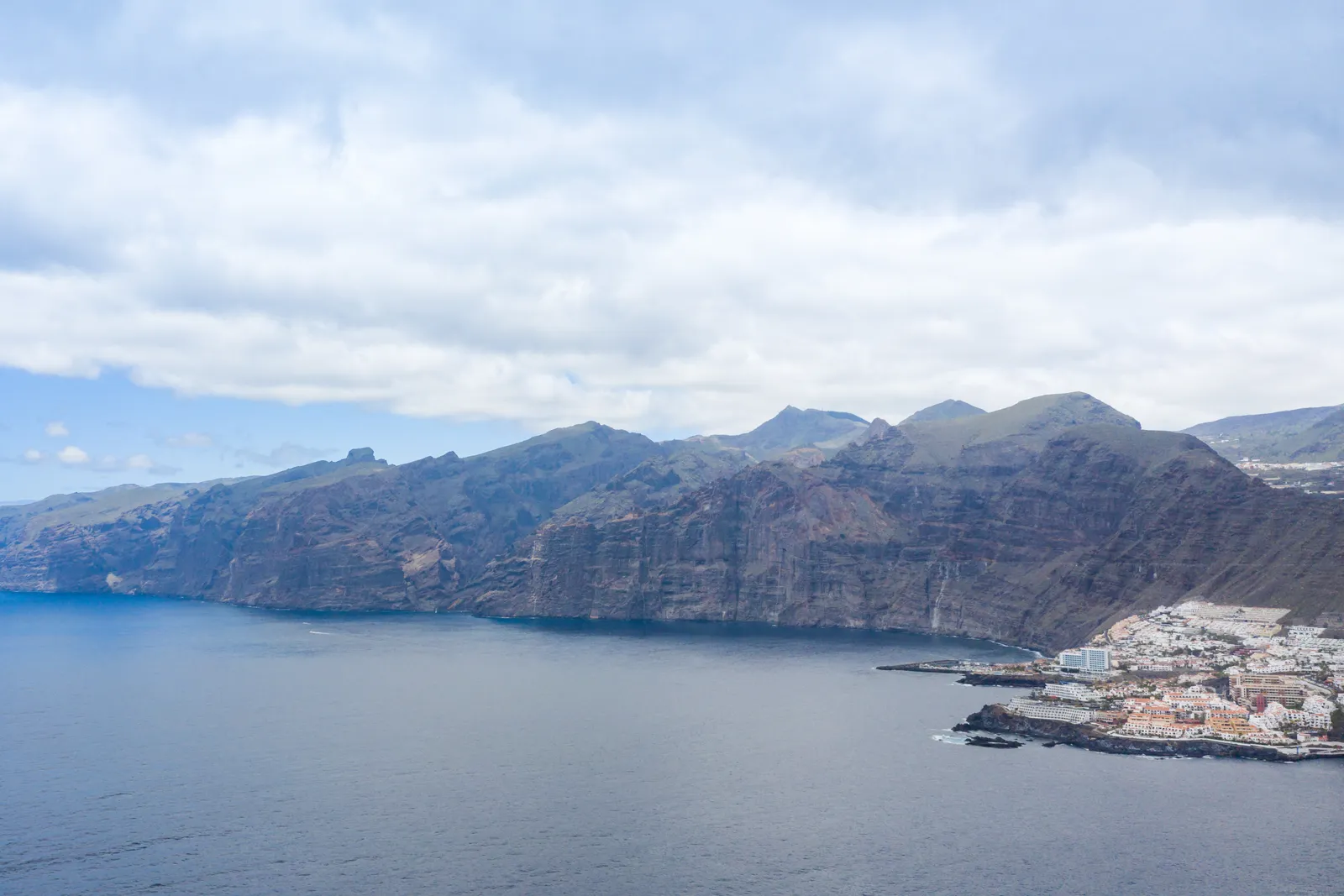
At a glance
- Where
- West coast, in Santiago del Teide
- The cliffs
- 300 to more than 600 metres high
- Out at sea
- Dolphins and pilot whales all year
- Close by
- Masca, Teno and the Punta de Teno lighthouse
Los Gigantes means The Giants, after the cliffs that drop straight into the sea from 300 to more than 600 metres. In Guanche times they were known as the Wall of Hell, or the Devil's Wall.
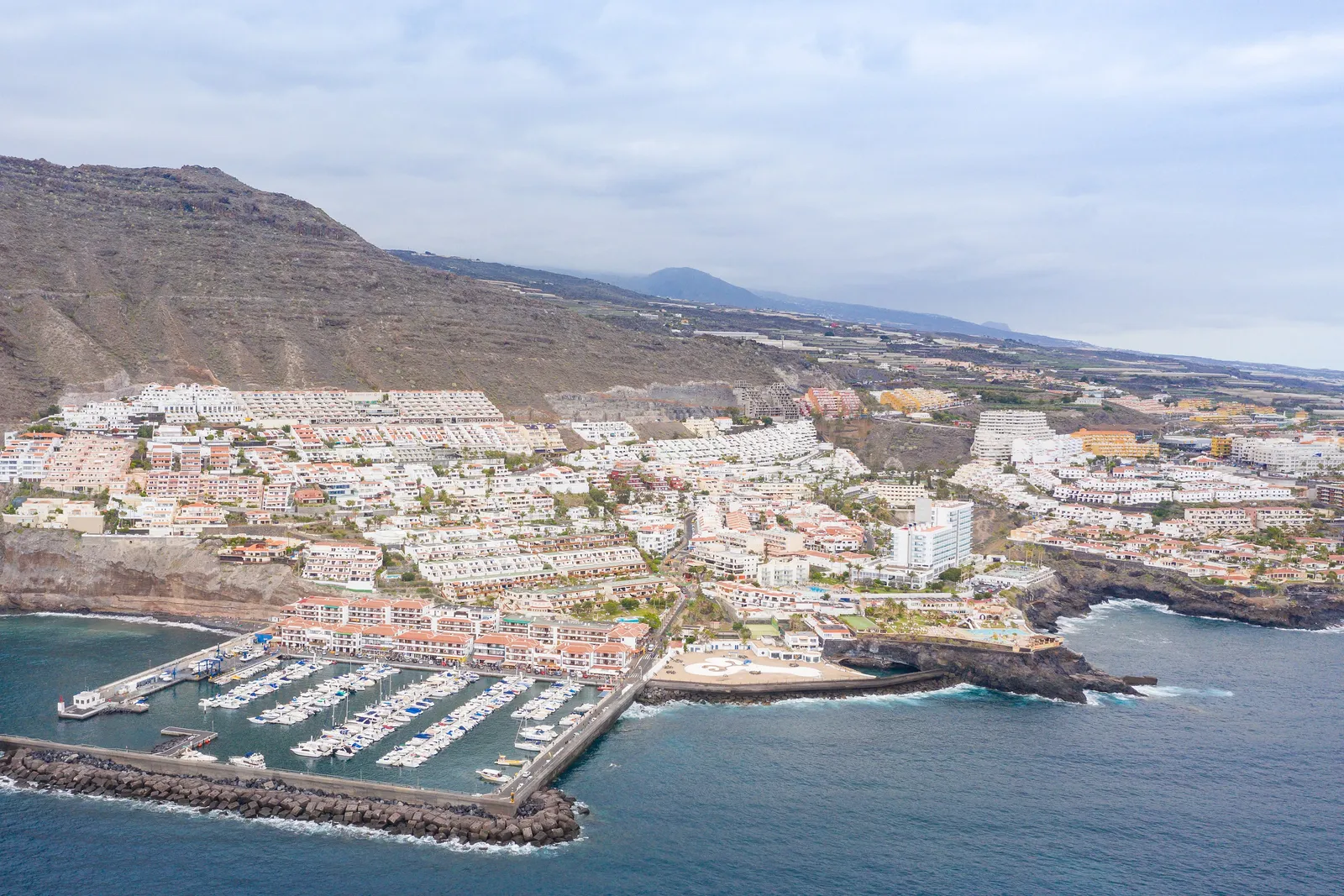
The resort is younger than it looks. Los Gigantes didn't appear as a place name on maps of the 1950s; it grew up later on the coast of Santiago del Teide, a municipality that was simply called Santiago until 1916, when del Teide was added so it wouldn't be confused with a Santiago on La Gomera.
The mountains behind it are some of the oldest ground on the island. About 7 million years ago Tenerife was 3 separate islands, Anaga, Teno and Adeje, which joined into one as new volcanoes erupted between them. The Teno mountains are about 7.4 million years old.
Whales and dolphins
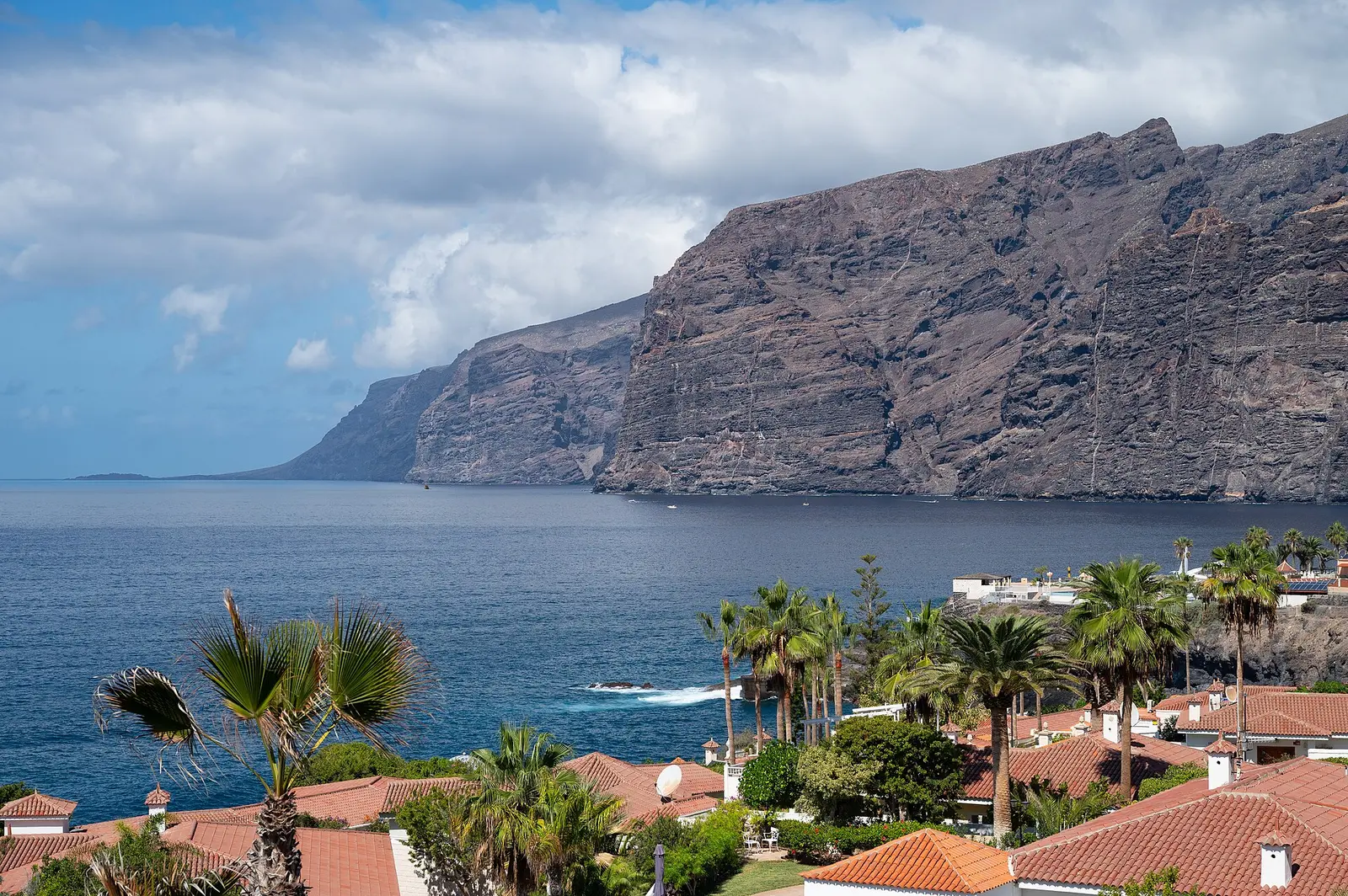
Whale and dolphin watching trips on Tenerife set out from Los Gigantes, as well as from Los Cristianos and Puerto Colón in Adeje. The sea off this coast, between Teno and Rasca, is a protected marine area of about 69,490 hectares, and a European Special Area of Conservation since September 2011.
Up to 22 species of whales and dolphins have been recorded here, and bottlenose dolphins and pilot whales live in these waters all year round. Loggerhead and green turtles are seen regularly too, along with at least 358 species of fish and colonies of garden eels on the sandy seabed.
In the protected area it's forbidden to feed the wildlife, to anchor on seagrass meadows or to disturb whales, dolphins and turtles, and boats are asked to slow down.
Masca and its gorge
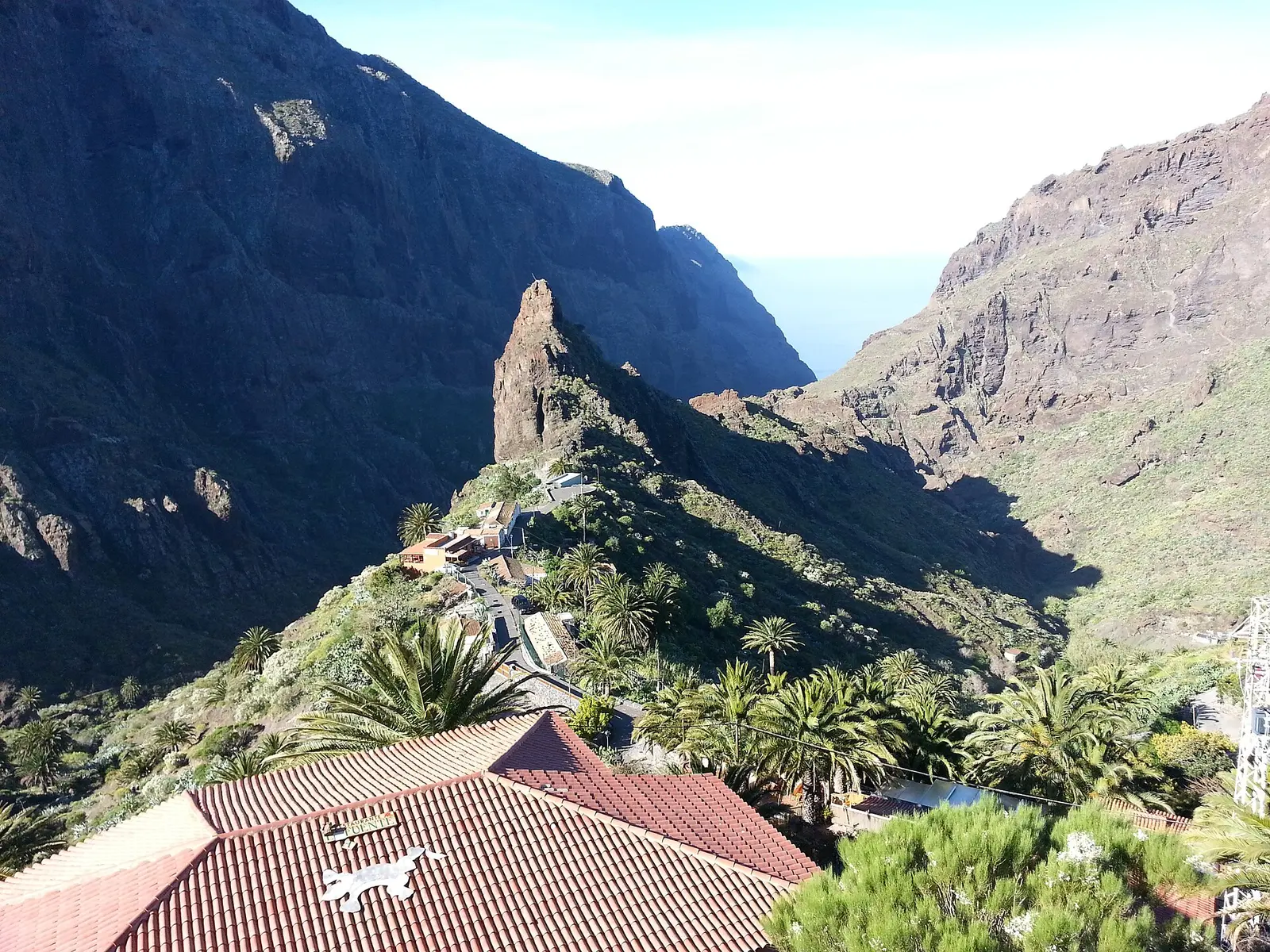
The hamlet of Masca sits at about 650 metres at the head of the Masca Gorge, its houses perched along the mountain ridges at the edge of deep ravines. It's reached by the TF-436, a mountain road full of tight bends between Santiago del Teide and Buenavista del Norte. For a long time its main link with the outside world was an old path, the Camino de los Guanches.
The path down the gorge runs about 8 km to a small pebble cove that can only be reached on foot or by boat, and the walk takes around 3 hours. Check the current rules for the path before you set off.
Masca has a tiny 18th century church, and one of its houses is a small museum and craft centre. Local legend says pirates once used it as a hideout, and a land snail found only on Tenerife, Hemicycla mascaensis, is named after it.
The Teno mountains
Teno Rural Park, in the far north-west of the island, covers about 8,000 hectares and takes in the hamlets of Masca, El Palmar, Las Portelas, Los Carrizales and Teno Alto. It has more than 100 km of waymarked walking trails, with broom and spurge on the south side, palms and dragon trees on the north-facing slopes, and laurel forest on the highest ground.
It's the last stronghold on Tenerife of the osprey and the Barbary falcon, and Cory's and Manx shearwaters nest on its coast. The Tenerife speckled lizard was only discovered here in 1996.
Teno Alto, on a high plateau about 770 metres up, had no road until 1972, which helped it keep its old traditions. Its carnival still has the baile de piñata, an old winter ritual now kept up in only a few places, and in April it marks the feast of Santo Hermano Pedro with the salto del pastor, the Canarian shepherds' leap.
The lighthouse at Punta de Teno
At the westernmost point of Tenerife, the red and white striped Punta de Teno lighthouse dates from 1978 and shows three white flashes every 20 seconds. It has no mains electricity and runs on 16 solar panels, and its light reaches 18 nautical miles.
The first lighthouse here was built between 1891 and 1893 but not lit until 1897, with a petroleum lamp. It was built with stone quarried on La Gomera, and its keepers worked four months on and two months off.
Up the hill
The most recent eruption on Tenerife was that of the Chinyero volcano in 1909, in the municipality of Santiago del Teide. The Chinyero special nature reserve, created in 1994, covers about 2,379 hectares.
The hill village of Arguayo is known for pottery made in the Guanche tradition, and a clay pot stands for it on the Santiago del Teide coat of arms. The municipality's flag shows nine silver Teides in a circle, one for each of its villages.
Dates for the diary
- CarnivalIn Teno Alto the baile de piñata is the most eagerly awaited part of carnival.
- AprilTeno Alto marks the feast of Santo Hermano Pedro with the salto del pastor, the shepherds' leap.
- First weekend of OctoberMasca celebrates its patron, Nuestra Señora de la Concepción.
Dates, times and prices can change, so check with the town hall or the operator before you set off.
Facts from the Deckchair FM Tenerife factbook, checked against published sources in November 2026.
Deckchair FM plays from Tenerife all day, every day.
Easy listening around the clock, with the island's weather and a bit of Tenerife life from our presenters.